
nLIGHT Stock And The Quiet Resilience Of US Domestic Manufacturing


Tariffs, shifting trade rules, and pressure on global supply chains are reshaping how investors think about US manufacturing stocks. Instead of relying on smooth cross-border trade, markets are reassessing companies that produce more at home and can better control their costs and inputs. This article looks at three US Domestic Manufacturing screener stocks that are directly exposed to these trade headlines and may react in different ways as policies evolve. Each stock is assessed on its business mix, exposure to tariffs and supply chains, and balance of risks and potential resilience, to help you decide whether they deserve a closer look or a wider berth.

nLIGHT (LASR)

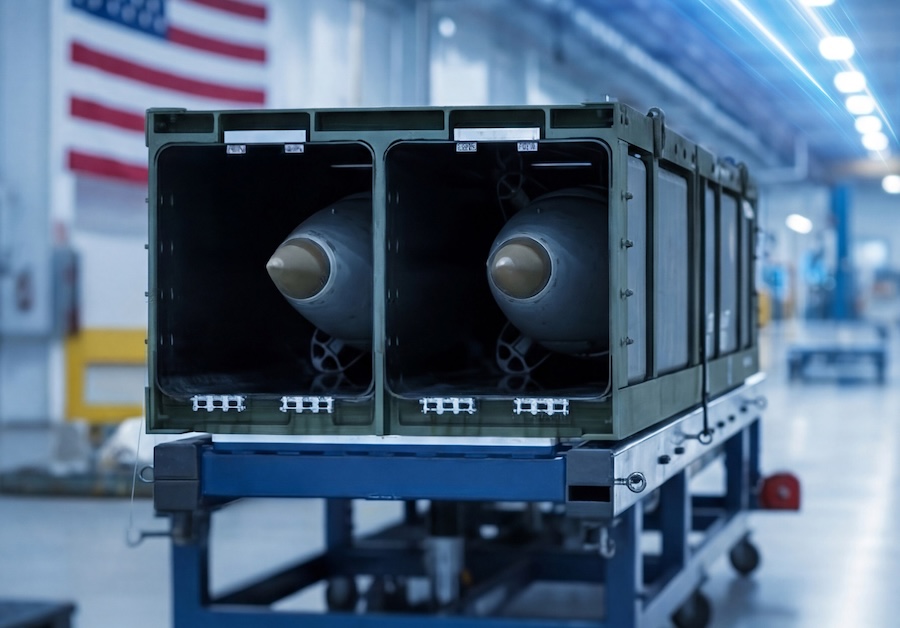
Overview: nLIGHT designs and manufactures high power semiconductor and fiber lasers used in aerospace and defense systems, industrial cutting and welding, and precise microfabrication, with much of its production based in US facilities. The company also supplies laser amplifiers and control systems that slot into high energy directed energy platforms for military customers worldwide.

Operations: nLIGHT generates about US$201.8 million from Products and US$88.1 million from Development, with roughly US$208.8 million of revenue from North America and around US$81.1 million combined from EMEA and Asia Pacific.

Market Cap: US$3.7b

nLIGHT sits at the intersection of onshoring and defense modernization, with vertically integrated US manufacturing and a growing focus on high energy directed energy systems that align with domestic industrial and security priorities in a world of rising tariffs and supply chain friction. Recent launches such as the HADES 70 kW class laser weapon module and a move toward scalable production have drawn analyst attention. At the same time, forecasts of faster revenue and earnings growth sit beside a history of losses, premium valuation multiples, insider selling, and dependence on government programs. For investors tracking US manufacturing and defense exposure, the key question is whether nLIGHT’s defense led trajectory and supply chain positioning justify those risks and the current pricing.

nLIGHT’s expansion into high energy defense systems is drawing attention, but the more important consideration is how current expectations compare with its profile of losses, premium pricing, and dependence on government customers, so it is worth reading the 2 key rewards and 2 important warning signs

NasdaqGS:LASR Earnings & Revenue Growth as at Jun 2026NasdaqGS:LASR Earnings & Revenue Growth as at Jun 2026

Clearfield (CLFD)

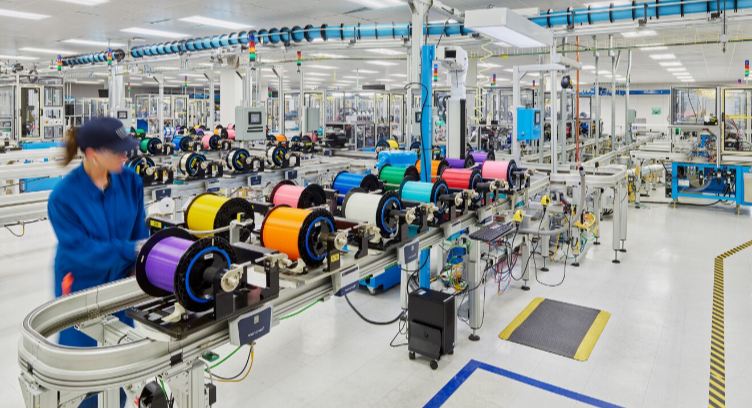
Overview: Clearfield designs and manufactures fiber management and delivery hardware that helps telecom carriers, community broadband providers, and enterprises deploy high speed internet, 5G, and data networks more efficiently across the United States and abroad.

Operations: Clearfield generates about US$148.5 million in revenue, with roughly US$142.0 million from the United States and US$6.5 million from other countries.

Market Cap: US$537.2 million

Clearfield stock is part of the broader discussion about onshoring and tariff risk because its fiber panels, cabinets, and connectors support US broadband builds while relying on a deliberately diversified supply chain. Management highlights dual sourcing between US and Mexican plants under USMCA, long standing Asian supplier relationships outside China, and the ability to shift cable production back to US facilities, all aimed at keeping product flowing even as trade rules change. At the same time, investors may consider current losses, valuation, insider selling, and reliance on government supported rural broadband programs alongside analyst expectations for revenue and earnings. The tension between that tariff resilience narrative and those financial trade offs is a key consideration when evaluating Clearfield.

Clearfield’s story of US focused broadband hardware, diversified suppliers, and government backed projects raises a bigger question, so review the 1 key reward and 3 important warning signs

NasdaqGM:CLFD Earnings & Revenue Growth as at Jun 2026NasdaqGM:CLFD Earnings & Revenue Growth as at Jun 2026

Daktronics (DAKT)

Overview: Daktronics designs, manufactures, and sells electronic scoreboards, large LED video displays, and digital signage used in sports venues, airports, highways, retail, and other public spaces across the United States and internationally.

Operations: Daktronics generates about US$295.8 million from Live Events, US$181.0 million from Commercial, US$177.4 million from High School Park and Recreation, US$77.0 million from International, and US$71.4 million from Transportation, with roughly US$709.2 million of revenue from the United States and US$93.4 million from outside the US.

Market Cap: US$977.1 million

Daktronics stock stands out in a tariff heavy world because around 80% of its finished products are built in US factories, management reports that less than half of its US factory inputs are imported, and recent tariff costs have been described as either negligible or already built into pricing and contracts. At the same time, the company is landing high profile projects at major airports and MLB stadiums. Analysts have noted expectations for stronger earnings and a higher future return on equity, even as revenue changes appear more modest and one off items and new leadership keep results choppy. For investors who want to understand whether this mix of US focused manufacturing, tariff flexibility, and project based activity justifies the risks, Daktronics may warrant closer attention.

Daktronics looks like a US manufacturing story that is quietly decoupling tariff worries from its order book, so it could be worth reading the 3 key rewards and 1 important warning sign to see what might be hiding behind those high profile projects.

NasdaqGS:DAKT Earnings & Revenue Growth as at Jun 2026NasdaqGS:DAKT Earnings & Revenue Growth as at Jun 2026

The three US manufacturing stocks in this article are a starting point, but the full US Domestic Manufacturing screener surfaces 42 more companies with equally compelling stories around domestic production, supply chains, and industrial capacity. Use Simply Wall St to identify and analyze the specific catalysts, financial health metrics, and business narratives that match your own highest conviction ideas in US manufacturing.

Take Control of Your Investment Journey

If nLIGHT or any of these companies sound like a great opportunity, register for FREE with Simply Wall St and add your companies to a Watchlist to monitor the share price against the fair value the ideal entry point.
Once you’ve made your move, manage your holdings with our Portfolio Command Center that filters out the noise to deliver only the most critical, actionable updates.
Throughout your journey, our Community allows you to filter the best ideas from thousands of investor perspectives.
By uncovering hidden catalysts and risks early, you’ll accelerate your decision-making and stay one step ahead of the market.

Seeking Alternatives Before The Crowd?

Fresh ideas can gain momentum fast, and the best entry points rarely stay quiet for long. Scan these curated shortlists before they are fully caught by the crowd and consider acting while they are still relatively early.

  • Spot companies already building breakout strength by running the 62 profitable AI stocks that aren’t just burning cash and filtering for businesses pairing real earnings with exposure to one of the market’s most talked about themes.
  • Track potential income anchors by reviewing the 8 dividend fortresses and focusing on companies where higher yields are backed by balance sheets you can scrutinize in detail.
  • Hunt for under-the-radar growth by scanning the 20 high quality undiscovered gems and pinpointing companies with fundamentals that could support sustained momentum before most investors are watching.

This article by Simply Wall St is general in nature. We provide commentary based on historical data
and analyst forecasts only using an unbiased methodology and our articles are not intended to be financial advice.
It does not constitute a recommendation to buy or sell any stock, and does not take account of your objectives, or your
financial situation. We aim to bring you long-term focused analysis driven by fundamental data.
Note that our analysis may not factor in the latest price-sensitive company announcements or qualitative material.
Simply Wall St has no position in any stocks mentioned.

New: Manage All Your Stock Portfolios in One Place

We’ve created the ultimate portfolio companion for stock investors, and it’s free.

• Connect an unlimited number of Portfolios and see your total in one currency
• Be alerted to new Warning Signs or Risks via email or mobile
• Track the Fair Value of your stocks

Try a Demo Portfolio for Free

Have feedback on this article? Concerned about the content? Get in touch with us directly. Alternatively, email editorial-team@simplywallst.com

Free Training

Source link

Johnson & Johnson Announces Another $1B US Manufacturing Plant


Johnson & Johnson announced plans to invest more than $1 billion in another new, US-based manufacturing site, this time in Florida. 

The global pharmaceutical manufacturer’s aim in building the new, Jacksonville facility is to strengthen its Vision operations by scaling US-based manufacturing, packaging, and distribution capabilities, according to a company news release. 

The investment also includes advanced manufacturing and packaging technologies to expand capacity and meet growing demand for Johnson & Johnson’s Acuvue brand contact lenses, used by more than 40 million patients worldwide, according to the company. The global pharmaceutical company manufactures more than 1.7 billion Acuvue contact lenses annually for US patients.

“This investment reinforces our long-standing conviction that advanced manufacturing in the United States is essential to delivering innovative, high quality healthcare solutions to patients at home and around the world,” Joaquin Duato, chairman and chief executive officer of Johnson & Johnson, said in the news release. 

Related:Lilly to Acquire 3 Vaccine Manufacturers

Duato added in the news release that the investment will bolster the resilience of Johnson & Johnson’s US supply chain. 

The global pharmaceutical manufacturer stated in the news release that it initially established a presence in Jacksonville in 1981 and has more than 1.5 million square feet of manufacturing, research, distribution, and operations facilities in the city today. 

The new facility is part of the pharmaceutical manufacturer’s previously announced $55 billion US investment in manufacturing, research and development, and technology through early 2029. Construction of the new facility is underway. J&J expects it to be fully operational in 2028.

The investment builds on J&J’s $6 billion annual economic impact in Florida, and supports the continued growth of its Jacksonville operations, strengthening opportunities for the 3,500 employees based in the area while reinforcing the regional economy.

In February, the global drug maker announced another investment of more than $1 billion in a next-generation cell therapy manufacturing facility in Montgomery County, PA. Additionally, in North Carolina, Johnson & Johnson is building a $2 billion drug product manufacturing facility.

The considerable investment is part of a larger push by pharmaceutical manufacturers to onshore or reshore their facilities, in part to avoid tariffs. Companies that are investing in building and expanding US-based facilities and research centers as part of three-year agreements include: 

Related:How CDMOs Turn “Undruggable” Into “Developable”

The multinational drug maker also announced plans to invest in a new Pennsylvania-based manufacturing facility — to the tune of more than $3.5 billion — in February.

In September, it started construction of its new active pharmaceutical ingredient (API) manufacturing plant in North Chicago, and announced a $1.95 billion investment to expand API production in the US in August 2025.

Related:Sun Pharma to Acquire US Drug Maker

Free Training

Source link

Lockheed Martin and GM Defense to explore manufacturing collaboration aimed at strengthening U.S. defense industrial base


Lockheed Martin and GM Defense have announced a new collaboration to strengthen the U.S. manufacturing and defense industrial base. The effort was facilitated by the U.S. Department of War.

The companies will work under a memorandum of understanding. They will explore opportunities to accelerate the delivery of critical capabilities and innovation.

The collaboration is intended to combine Lockheed Martin’s defense production expertise with General Motors’ industrial capabilities. GM brings experience in high-rate commercial manufacturing and engineering.

The companies said the work will focus on strengthening defense supply chains. It will also cover manufacturing and design capabilities, as well as potential production capacity expansion through commercial manufacturing expertise and infrastructure.

Initial efforts will include exploring ways to accelerate production readiness. The companies will also assess how proven commercial manufacturing approaches could support defense production requirements.

“America’s security depends not only on developing advanced technologies, but on our ability to produce them quickly, reliably and at scale,” said Frank St. John, chief operating officer, Lockheed Martin. “This collaboration brings together two leaders in American manufacturing and innovation to explore new ways to strengthen the defense industrial base, expand production capacity and accelerate delivery of critical capabilities for the United States and its allies.”

“Working together, GM Defense and Lockheed will further strengthen American manufacturing and national defense by driving greater speed, efficiency, and innovation in the aerospace and defense sectors,” said Steve duMont, president of GM Defense. “Over the coming weeks, we will be working to identify initial projects to pursue together.”

The companies said the collaboration reflects growing demand across the defense sector. They identified production capacity, supply chain resilience and manufacturing agility as key areas of need.

By combining commercial and defense expertise, Lockheed Martin and GM Defense aim to identify opportunities to accelerate production timelines. The companies said any such work would need to maintain the quality, performance and reliability standards required for mission-critical systems.

Free Training

Source link

NAFTZ Supports Senate Bill Meant to Enhance U.S. Manufacturing Competitiveness Across North America


Measure would help restore parity for U.S. manufacturers exporting to Canada and Mexico, strengthening North American supply chains and cross-border trade

WASHINGTON, June 16, 2026 /PRNewswire/ — The National Association of Foreign-Trade Zones (NAFTZ), the only national trade association focused solely on the U.S. Foreign-Trade Zones program, today applauded the introduction of Senate companion legislation from U.S. Sen. Tim Scott (R-S.C.) aimed at strengthening the competitiveness of American importers and exporters operating in U.S. FTZs.

The National Association of Foreign-Trade Zones (NAFTZ) today applauded the introduction of Senate companion legislation from Sens. Tim Scott (R-S.C.) and Katie Britt (R-Ala.), aimed at strengthening the competitiveness of American importers and exporters operating in U.S. FTZs.
(Photo by Harold Mendoza on Unsplash)

The National Association of Foreign-Trade Zones (NAFTZ) today applauded the introduction of Senate companion legislation from Sens. Tim Scott (R-S.C.) and Katie Britt (R-Ala.), aimed at strengthening the competitiveness of American importers and exporters operating in U.S. FTZs.
(Photo by Harold Mendoza on Unsplash)

The legislation – co-sponsored by Sen. Katie Britt (R-Ala.) – mirrors the recently introduced Foreign-Trade Zone Export Enhancement Act in the House and would provide duty-relief benefits for certain goods produced or altered in federally designated U.S. FTZs and subsequently exported to Canada and Mexico. The proposal addresses a longstanding imbalance under the U.S.-Mexico-Canada Agreement (USMCA) that has placed businesses operating in U.S. FTZs at a competitive disadvantage relative to counterparts in Canada and Mexico.

Annual trade between the U.S., Canada and Mexico totals roughly $1.8 trillion, with operators increasingly relying on cross-border production, sourcing and export relationships to remain globally competitive. Yet, under current USMCA rules, businesses operating in U.S. FTZs must pay duties on inputs before exporting finished goods to North American partners – even when those products would otherwise qualify for preferential treatment under the agreement.

Meanwhile, competing manufacturers in Canada and Mexico benefit from national duty-relief programs that eliminate comparable costs – including Mexico’s PROSEC program and Canada’s targeted tariff relief efforts.

“South Carolina companies operating in Foreign-Trade Zones make significant contributions to the Palmetto State’s economy,” said Sen. Scott. “My bill levels the playing field for our businesses by making sure American manufacturing remains globally competitive, boosting USA-made exports, and supporting American jobs.”

Ultimately, the bill would clarify U.S. trade law to ensure qualifying goods produced in U.S. FTZs can benefit from duty-relief treatment when exported to Canada and Mexico, helping restore the intent behind the U.S. Foreign-Trade Zones program – first established by Congress in 1934 to promote domestic production and exports.

“U.S. Foreign-Trade Zones were designed to make the nation a more competitive place to invest and operate in,” said Jeff Tafel, president of NAFTZ. “Unfortunately, current USMCA rules have produced the opposite result for many U.S. FTZ-based operations, imposing costs that competitors in Canada and Mexico often do not face. Sen. Scott’s proposal recognizes that American businesses should not be penalized simply because they operate within one of these zones.”

NAFTZ has advocated for reforms addressing this issue since the NAFTA era and has continued that effort through the implementation of USMCA. The association maintains that the legislation would not weaken the agreement, but rather ensure that U.S. operators receive treatment comparable to that already available to competing North American producers.

The organization also noted that the proposal aligns with broader national priorities surrounding reshoring, supply-chain security and domestic industrial growth.

“At a time when policymakers are focused on strengthening North American supply chains and encouraging manufacturing investment in the U.S., this legislation addresses a clear policy inconsistency that has persisted for far too long,” said Melissa Irmen, director of advocacy for NAFTZ. “The bill would help reduce cost disparities for qualifying U.S. FTZ operators, encourage additional investment in U.S. production facilities, and better align USMCA implementation with the original purpose of the U.S. FTZ program.”

Irmen added: “We appreciate Sen. Scott’s leadership and look forward to working with lawmakers in both chambers to advance this important measure.”

U.S. FTZ users like AFL, a South Carolina-based manufacturer of fiber-optic cable, hardware and equipment, are equally hopeful for the bill’s eventual passage.

“We appreciate Senator Scott’s leadership in supporting policies that strengthen U.S. manufacturing competitiveness,” said Jaxon Lang, CEO and President of AFL. “This legislation will help ensure that products manufactured in South Carolina can be exported efficiently to Canada and Mexico, allowing companies like AFL to compete on a level playing field and continue investing in jobs and innovation here at home.”

NAFTZ now intends to work directly with Congress, the administration and key industry stakeholders to further the proposal. Its House counterpart is pending review among the chamber’s Ways and Means Committee.

About the National Association of Foreign-Trade Zones (NAFTZ)

The National Association of Foreign-Trade Zones (NAFTZ) is the collective voice of the U.S. Foreign-Trade Zones community. Representing public and private sector members across the United States, NAFTZ is dedicated to advancing the U.S. Foreign-Trade Zones program through advocacy, education and collaboration. The association works to promote policies that strengthen U.S. competitiveness, encourage domestic investment and job creation, and support secure and efficient international trade operations. For more information visit: www.naftz.org.

SOURCE National Association of Foreign-Trade Zones

Free Training

Source link

Democrats Introduce Bill to Boost U.S. Manufacturing, Reduce Reliance on China


Washington — Senate Democrats have introduced sweeping legislation aimed at rebuilding America’s manufacturing base, reducing reliance on Chinese-dominated supply chains and expanding federal support for industries viewed as critical to U.S. economic and national security.

The Make More in America Act would broaden the mandate of the Export-Import Bank of the United States, known as EXIM, allowing it to finance domestic manufacturing projects in sectors including semiconductors, artificial intelligence, critical minerals, biotechnology, robotics, batteries and shipbuilding.

Senate Democratic Leader Chuck Schumer said the measure is intended to address vulnerabilities exposed by repeated disruptions to global supply chains, which he said have contributed to higher costs for American consumers.

“Americans cannot keep paying the price every time a supply chain crisis hits — whether it’s a pandemic, a war, or the whims of the Chinese Communist Party trying to undermine the American economy,” Schumer said.

“We have to break the cycle of supple chain shocks that are raising prices, invest in American industry, and protect our national security,” he added.

The bill was introduced by Schumer along with Democratic Sens. Jack Reed, Amy Klobuchar, Chris Coons, Brian Schatz, Cory Booker, Elizabeth Warren, Chris Van Hollen, Tammy Duckworth, Mark Kelly, Andy Kim, Lisa Blunt Rochester and Angela Alsobrooks.

Under the legislation, EXIM would be authorized to support the development, commercialization, production and future export of technologies deemed critical to U.S. competitiveness and national security. The bill would create a permanent Make More in America Program focused on expanding manufacturing capacity across the country.

Priority industries would include semiconductors, artificial intelligence, quantum technology, biotechnology, advanced energy systems, critical minerals, drones, robotics and shipbuilding.

“The United States has faced a manufacturing decline under the Trump Administration and we need to reverse that trend,” Reed said.

“We must bolster domestic supply chains, revive America’s manufacturing competitiveness, and get our manufacturing workforce growing again to ensure America is capable of responding to global threats and builds critical technologies here at home.”

Democrats backing the bill cited China’s growing industrial dominance and U.S. dependence on overseas suppliers for strategically important goods. The bill’s findings state that China accounts for a substantially larger share of global manufacturing output than the United States and continues to strengthen its position in advanced technologies.

Booker said the legislation is designed to help American workers compete in the global economy.

“By expanding the Export Import Bank’s core mandate, this legislation strengthens EXIM’s ability to support the industries that are essential to our national security and economic leadership from semiconductors to advanced manufacturing,” Booker said.

The proposal would allow federal support for building or expanding manufacturing facilities in the United States and would require recipients to show benefits for American workers. Projects would need to include commitments related to workforce training and education, while construction work would be subject to prevailing wage requirements.

The legislation also includes safeguards intended to protect taxpayer funds. Assistance could not be used for stock buybacks or repayment of existing debt, and projects that fail to meet agreed deadlines or labor requirements could face clawbacks.

Senior executive branch officials, members of Congress and their immediate family members would also be barred from receiving support under the program. (Source: IANS)

Free Training

Source link

Slowing Growth Coupled with Rising Costs, U.S. Manufacturing Faces Dual Pressures


U.S. manufacturing output stalled for the first time this year in May. Data released by the Federal Reserve on Monday showed that U.S. manufacturing output in May was flat month-over-month, ending the previous four-month consecutive growth trend and falling below market expectations. The data showed that factory output in May was essentially unchanged from the previous month, while the April figure was revised upward to a 0.7% increase. Economists had generally expected manufacturing output to grow by 0.3% in May. Total U.S. industrial output, which includes manufacturing, utilities, and mining, rose by only 0.1%.

Cost Pressures Erode Production Willingness

Market participants pointed out that this official data presents a certain contrast with the results of several recent manufacturing surveys. Previous surveys had shown that the manufacturing sector as a whole continued to expand, driven by war-induced stockpiling demand, growth in defense orders, and the boom in AI data center construction. However, the latest data indicate that cost pressures are gradually eroding enterprises’ willingness to produce. Data released last week showed that the U.S. Producer Price Index (PPI) in May recorded its fastest year-over-year growth since 2022. Even excluding the automotive and parts industry, manufacturing output still failed to register growth.

Notable Sectoral Divergence

From the perspective of industry structure, durable goods manufacturing continued to grow, with sectors such as computers and electronics, electrical equipment, metal products, machinery, and basic metals all expanding, benefiting from the AI data center construction boom and capital expenditure growth brought about by the reshoring of manufacturing. However, non-durable goods manufacturing declined, with output in petroleum and coal products, plastic and rubber products, and textiles all retreating. Economist Stuart Paul stated that data center construction and some manufacturing reshoring plans are still supporting durable goods growth, but this does not mean that the United States is experiencing a comprehensive manufacturing renaissance.

Supply Chain Issues and Bright Spots Coexist

Supply chain issues persist, with key raw materials such as memory chips and plastic resins still in tight supply. On the other hand, output of defense and aerospace equipment grew for the sixth consecutive month, reaching its highest level since December 2019, with demand for ammunition inventory replenishment during wartime and expectations for military exports serving as important supports. Mining output rose by 1.3%, becoming a significant pillar of industrial growth, while utility output declined. The New York Fed’s manufacturing survey released on the same day showed that activity expanded only slightly in June, with an indicator reflecting expectations for future selling prices rising to its highest level since 2022. Analysts believe that U.S. manufacturing is currently facing a situation of slowing growth accompanied by rising costs.

Consumer Products and Services
Financial Service
Mining
Utilities

Free Training

Source link

Bosch Posts $18.8 Billion in 2025 Sales in North America, Marks 120 Years in the US


As it continues to invest for growth in the North American region, Bosch announced its final 2025 results, achieving $18.8 billion USD (16.6 billion euros) in sales. This represents a slight year-on-year increase of approximately 4%.

Despite global economic challenges, the North American market once again posted growth and continues to be a focus market for growth at Bosch, particularly in the United States, company officials stated in a press release. Bosch has a long-standing commitment to the U.S. and is celebrating its 120th anniversary in the country in 2026.

“Our 2025 performance demonstrates the dedication of our team in the region and the economic resilience of our market,” said Paul Thomas, president and CEO of Bosch in North America and president of Bosch Mobility Americas. “We continue to aim for the North American region to represent 20% of the global turnover of Bosch as part of our global 2030 strategy.”

Bosch ended the 2025 year with around 41,000 associates in North America across all its operations.

Bosch Operates 20 US Manufacturing Sites Across 14 States

A major part of the commitment to the U.S. is in manufacturing, where Bosch manages 20 sites with manufacturing operations supporting all four of its business sectors: Mobility, Consumer Goods, Energy and Building Technology, and Industrial Technology. U.S. manufacturing for Bosch expanded in 2025 as the company closed a major acquisition. Bosch currently maintains manufacturing locations in Arkansas, California, Florida, Illinois, Indiana, Kansas, Kentucky, North Carolina, Michigan, Minnesota, Oklahoma, Pennsylvania, South Carolina and Tennessee. In 2025, several key manufacturing milestones occurred:

  • Bosch Mobility launched production on a new, high-tech line in its Charleston, South Carolina, facility to produce the 10th generation of electronic stability control, known as ESP.
  • Bosch Power Tools opened the $130 million USD expansion of its facility in Lincolnton, North Carolina, for the manufacturing of power tool accessories.
  • Prominent manufacturing locations in Norman, Oklahoma, and Wichita, Kansas, were added as Bosch Home Comfort closed a major acquisition.
  • Construction continued for the planned $1.9 billion USD transformation of the Bosch site in Roseville, California, into a facility that produces and tests silicon carbide (SiC) semiconductors with state-of-the-art processes and equipment.

AI, Software & Powertrain Options Fuel Mobility Business Sector

The Mobility business sector achieved $11.4 billion USD in sales in North America in 2025, demonstrating nominal growth ($10.8 billion USD in 2024) despite market headwinds. The company continues to develop software and artificial intelligence-enabled solutions for customers tied to the needs of the local market, particularly in the United States, noted the release.

In December 2025, Bosch Mobility introduced two new features showcasing AI as an enabler. The AI extension platform extends the capabilities of existing cockpit systems, bringing advanced AI functions into the vehicle. This allows OEMs to quickly and easily retrofit existing hardware or system architecture without costly redesign, the company said.

“The AI extension platform helps to provide the features that consumers are looking for while also keeping an eye on vehicle affordability since it doesn’t require significant shifts at the system level and in the vehicle architecture,” Thomas said.

The company continues to see growth in solutions to support hybrid vehicles, where the rich history and system-level expertise of Bosch in powertrain is highly applicable. Bosch Mobility integrates and modularizes a variety of components backed by development teams for both internal combustion and electrification.

The company recently introduced a next-generation synchronous motor designed for traction and generation applications from hybrid through battery-electric and fuel cell powertrains that delivers a world-record gain in efficiency, with only 0.85 kWh/100 km losses in the WLTC (Worldwide Harmonized Light Vehicles Test Cycle), representing up to a 30% reduction from the previous generation.

“The U.S. market will continue to be a multi-lane highway of powertrain options,” Thomas said. “We are supporting a broad range of hybrid, internal combustion, battery-electric and hydrogen solutions so that we can help our OEM customers provide consumers with options based on the vehicle use case.”

Consumer Goods Sector

The Consumer Goods business sector, comprised of Home Appliances and Bosch Power Tools, registered third-party sales of $3.5 billion USD in 2025, up from $3.4 billion USD in 2024. Home Appliances reported strong 2025 performance, outpacing the market with a more than 5% increase in turnover.

Major Portfolio Shifts in Energy & Building Technology

The Energy and Building Technology business sector posted $2.5 billion USD in sales in 2025 as it underwent fundamental shifts in its portfolio. In August, Bosch closed the acquisition of the residential and light-commercial heating, ventilation, and air conditioning (HVAC) business from Johnson Controls. This significantly expanded the presence of Bosch Home Comfort in the North American market, where the brand portfolio now includes YORK, Hitachi and more alongside the Bosch brand.

In October 2025, the Bosch Home Comfort Group completed another acquisition in the North American market: US Air Conditioning Distributors LLC, which has 52 locations and almost 500 employees in California, Arizona, Utah and Idaho. The company’s factory-direct sales model provides the Bosch Home Comfort Group with direct customer access.

In October 2025, Bosch announced it would unify its global building technologies integrator operations under the unified name Bosch Building Technologies. Beginning in January of 2026, the brands Climatec and Paladin Technologies combined their branch networks under the Bosch brand. The Building Technologies business now features a wide-ranging portfolio of integrated, digital and cross-domain solutions, positioning it to expand in the areas of Building Automation, Security, Fire Life Safety, and Energy Solutions.

At the end of June 2025, Bosch completed the sale of its security and communications technology product business, now named KEENFINITY Group, to Triton as Bosch Building Technologies focuses on its system integrator business.

Industrial Technology Grows Despite Market Challenges

The Industrial Technology business sector faced continued market headwinds, posting a nominal gain in sales of $1.4 billion USD, up from $1.3 billion in 2024. The Industrial Technology business in the U.S. includes Bosch Rexroth, which has been part of the Bosch family for 25 years, and Hydraforce, which joined the Bosch family in 2023.

2026 Regional Financial Results infographic2

Bosch Group: Outlook for 2026 & Strategic Direction

In the face of geopolitical tensions and trade barriers, the Bosch Group says that it intends to exploit the growth prospects in its global markets with full innovative strength in the 2026 business year. The necessary upfront investments in areas of future importance are set to remain at the high level of previous years. In 2025, Bosch devoted some 12 billion euros to investments in research and development and to capital expenditure. The supplier of technology and services is planning sales growth of 2%–5% and an EBIT margin from operations of 4%–6% for 2026.

“As a global technology leader, we are committed to shaping the trends of automation, digitalization, electrification and artificial intelligence, as this also paves the way for profitable growth in our business,” said Stefan Hartung, chairman of the board of management of Robert Bosch GmbH.

Despite considerable challenges, Bosch was able to achieve sales revenue of 91.0 billion euros ($102.8 billion USD) in the 2025 business year, slightly up on the previous year (2024: 90.3 billion euros). After adjusting for exchange-rate effects, this was equivalent to 4.1% growth. At 2%, the EBIT margin from operations was below the previous year’s figure (2024: 3.5%). Necessary structural and personnel adjustments to increase future viability had a considerable negative impact on the result in the form of provisions of 2.7 billion euros.

“Bosch can deliver the future—even under unfavorable conditions. 2026 will be a year of progress,” said Hartung. When it comes to innovative strength, Bosch is one of the strongest industrial companies in the world and, with around 6,300 patents in 2025, one of the most prolific patent applicants in Europe. Hartung sees the expansion of innovation leadership as a key success factor for expanding business and implementing the company’s Strategy 2030.

For more details on Bosch’s annual report for 2025, visit bosch-press.com.

Free Training

Source link

Johnson & Johnson Raises U.S. Vision Manufacturing Capacity With More Than $1 Billion Jacksonville Investment


Johnson & Johnson announced an investment of more than $1 billion to expand its Vision operations in Jacksonville, Florida, strengthening the company’s U.S.-based manufacturing, packaging, and distribution capabilities for its ACUVUE-brand contact lenses.

The investment includes the construction of a new distribution facility and the addition of advanced manufacturing and packaging technologies designed to increase capacity and meet growing demand for the company’s contact lens products. The expansion is intended to support eye health solutions used by more than 40 million patients in the United States and globally.

The project is part of Johnson & Johnson’s previously announced $55 billion commitment to U.S. manufacturing, research and development, and technology through early 2029. Construction of the new Jacksonville facility is already underway, and the site is expected to become fully operational in 2028.

Johnson & Johnson said the expansion builds on its approximately $6 billion annual economic impact in Florida and supports continued growth for its Jacksonville operations. The company currently employs about 3,500 people in the area.

Jacksonville has served as a key center for the company’s vision business for more than 40 years. Since establishing operations there in 1981, Johnson & Johnson has expanded to more than 1.5 million square feet of manufacturing, research, distribution, and operations facilities. The company currently manufactures more than 1.7 billion ACUVUE contact lenses annually for U.S. patients.

Local, state, and federal officials said the investment will strengthen healthcare manufacturing capabilities, create jobs, and reinforce Northeast Florida’s role in the life sciences and advanced manufacturing sectors.

KEY QUOTES:

“This investment reinforces our long-standing conviction that advanced manufacturing in the United States is essential to delivering innovative, high quality healthcare solutions to patients at home and around the world. By further strengthening our Vision operations in Jacksonville with next-generation manufacturing, packaging and distribution capabilities, we are enhancing the resilience of our U.S. supply chain while helping more people see better and live better. This commitment reflects the confidence we have in our people, our technology, and our more than 40-year legacy of advancing eye health globally.”

Joaquin Duato, Chairman And Chief Executive Officer, Johnson & Johnson

“Johnson & Johnson’s commitment is a strong vote of confidence in Jacksonville, our workforce, and our future. Jacksonville continues to lead in advanced manufacturing and life sciences innovation. This expansion strengthens our high-tech footprint while creating quality jobs and long-term opportunities for our community.”

Donna Deegan, Mayor Of Jacksonville

“Florida continues to play a leading role in strengthening America’s healthcare supply chain to better serve patients. The billion-dollar investment in Jacksonville will help expand the domestic capacity and strengthen America’s healthcare infrastructure. That means more jobs in Florida, a stronger national economy, less reliance on foreign healthcare products, and better results for our nation’s long-term health and competitiveness.”

Rick Scott, U.S. Senator

“I am thrilled to see this major $1 billion investment in our state, funding new state of the art facilities and supporting jobs in the Jacksonville area. This is more than simple investment – this represents a down payment on the future of Jacksonville and the state of Florida. Companies are moving to Florida in droves, and massive investment such as this highlights Florida as the nation’s top state to grow your family and your business.”

Ashley Moody, U.S. Senator

“Johnson & Johnson’s continued investment in Jacksonville reflects the region’s strength in advanced manufacturing and critical healthcare production. It supports a skilled workforce, strengthens domestic capacity, and reinforces Northeast Florida’s role in keeping America economically competitive.”

John Rutherford, U.S. Representative

“Johnson & Johnson’s $1 billion investment in Jacksonville will strengthen the supply chain for critical vision products while creating high-quality jobs and generating significant economic benefits for Northeast Florida. The project reinforces Jacksonville’s status as a premier destination for healthcare manufacturing and innovation, helping ensure the region remains at the forefront of supporting patients and advancing medical technology.”

Aaron Bean, U.S. Representative


Free Training

Source link

Amazon, Corning Partner on Fiber Optic Expansion to Power U.S. Data Center Infra Growth


Amazon announced a multibillion-dollar agreement with Corning, a leading manufacturer of advanced glass and fiber optic technology, to supply the optical fiber, cable, and connectivity solutions that power Amazon’s expanding data center infrastructure across the United States. 


The investment will create 1,000 new, highly skilled jobs at Corning’s manufacturing facilities across North Carolina, and support hundreds of additional construction jobs to expand Corning’s facilities.


Comarch
Comarch


Through the agreement, Amazon will work with Corning on a new program that will expand its Fiber Optic Technician Training Program with Catawba Valley Community College to train students for careers in fiber optic manufacturing and related technical roles. The program provides hands-on education and courses that will increase the talent pool and offer pathways to high-paying technical roles. The efforts will help strengthen the domestic supply chain and U.S. manufacturing base while serving the region and state to help expand residential and commercial fiber densification efforts.


Amazon’s investments in North Carolina have created more than 26,000 jobs across the state. This multibillion-dollar agreement with Corning continues that commitment, channeling investment into American manufacturing and creating 1,000 new jobs at their facilities near our data centers, said Matt Garman, CEO of AWS.


Investing in North Carolina


This agreement with Corning is in addition to Amazon’s plans, announced last year, to invest $10 billion in North Carolina to expand cloud computing infrastructure. It builds on the more than $20 billion Amazon has invested in North Carolina since 2010, creating over 26,000 jobs spanning logistics, cloud infrastructure, and renewable energy across the Tar Heel State.


Every day, North Carolina is proving that American manufacturing and cutting-edge technology go hand in hand. This multibillion-dollar agreement, between Amazon and Corning, will create 1,000 family-sustaining jobs for hardworking North Carolinians while also strengthening the critical infrastructure of the U.S. supply chain. This partnership further proves that North Carolina is the number one state in the country for American businesses to invest, build, and grow. As a leading voice in the Senate for workforce development and American manufacturing, I am proud that we are continuing to capitalize on that momentum in North Carolina, said U.S. Senator Ted Budd.


Powering data centers, creating jobs, and fueling economic growth


Amazon’s data centers power the services millions of people and businesses rely on every day, from hospitals and emergency services to streaming entertainment and AI innovation. Corning’s fiber optics are a critical part of that infrastructure, and together, these investments help fuel the U.S. economic engine.


For 175 years, Corning has pioneered the technologies that connect people and transform industries. Amazon’s investment will help us expand production, create 1,000 new advanced manufacturing jobs at our facilities, and lead the way toward building a resilient U.S. manufacturing base, said Wendell Weeks, chairman, CEO, and president of Corning.


Amazon’s long-term commitment to North Carolina goes beyond direct investments and jobs created in the state. Through workforce development, Career Choice, and upskilling programs, Amazon has already provided practical training for nearly 7,000 people in North Carolina, helping to open new pathways for higher-paying jobs and fulfilling careers.


In the last decade, Amazon has contributed more than $72 million to charities and organizations supporting local needs across North Carolina, with $10 million provided in 2025 alone to 26 local community partners. This includes contributions like $1.5 million to enhance public safety services for southeastern Hamlet and surrounding Richmond County communities by funding a new fire substation that is expected to lower emergency response times and homeowner insurance premiums.


Matt Garman, CEO of AWS


Amazon’s investments in North Carolina have created more than 26,000 jobs across the state. This multibillion-dollar agreement with Corning continues that commitment, channeling investment into American manufacturing and creating 1,000 new jobs at their facilities near our data centers,


U.S. Senator Ted Budd


Every day, North Carolina is proving that American manufacturing and cutting-edge technology go hand in hand. This multibillion-dollar agreement, between Amazon and Corning, will create 1,000 family-sustaining jobs for hardworking North Carolinians while also strengthening the critical infrastructure of the U.S. supply chain. This partnership further proves that North Carolina is the number one state in the country for American businesses to invest, build, and grow. As a leading voice in the Senate for workforce development and American manufacturing, I am proud that we are continuing to capitalize on that momentum in North Carolina,


Wendell Weeks, chairman, CEO, and president of Corning


For 175 years, Corning has pioneered the technologies that connect people and transform industries. Amazon’s investment will help us expand production, create 1,000 new advanced manufacturing jobs at our facilities, and lead the way toward building a resilient U.S. manufacture

Free Training

Source link

Critical Minerals Executive Order Strengthens U.S. Manufacturing


President Trump’s recent executive order to accelerate permitting and access to domestic critical minerals will help manufacturing—and America—win, NAM President and CEO Jay Timmons said.

What’s going on: The recent executive order aims to boost U.S. production of critical minerals—which include lithium and cobalt—“as well as uranium, copper, potash, gold and any other element, compound or material as determined by the Chair of the National Energy Dominance Council,” according to the EO.

  • China dominates the global market for critical minerals, which are vital in the manufacture of everyday goods from cell phones and computers to advanced energy and defense technologies.
  • Increasing American production of these crucial substances “can create jobs, fuel prosperity and significantly reduce our reliance on foreign nations,” according to the EO. “Transportation, infrastructure, defense capabilities and the next generation of technology rely upon a secure, predictable and affordable supply of minerals.”

What’s in it: The EO—which cites “overbearing federal regulation” for the lack of American critical mineral production—enumerates “staggered timelines for agencies across government to prioritize financing for domestic mineral projects, including loans, capital and technical assistance, and calls on the Department of Defense to accelerate domestic mineral production” (POLITICO Pro’s GREENWIRE).

  • It also calls on the DOD to work with the U.S. International Development Finance Corporation to offer financing for the projects.

Aligned on regulations: The NAM has long called for regulatory reform to combat the onslaught of rules coming from the federal government—and this EO is a much-needed reform, said Timmons.

  • “For too long, red tape and burdensome regulations have stood in the way of the basic building blocks that power manufacturing in the United States, especially mining and processing the minerals manufacturers rely on to create jobs and dominate on the world stage,” Timmons said. “The administration is addressing those barriers, making it easier for manufacturers to access the resources we need to build the future in America.”

Free Training

Source link