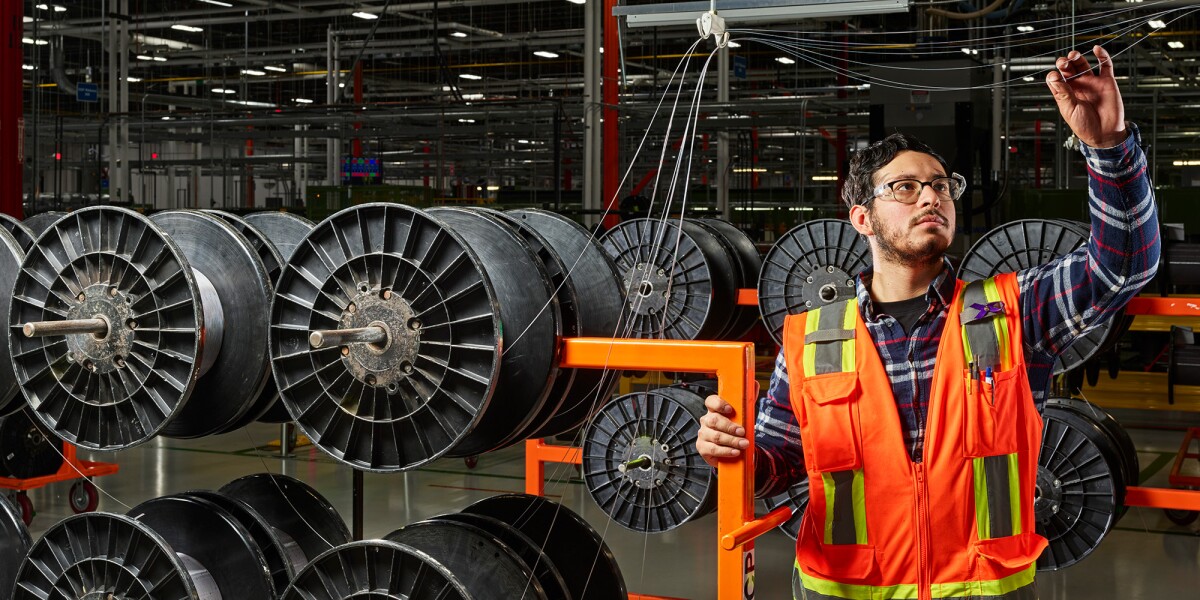

‘We need to unleash American workers, not protect them’ – Mackinac Center


“I think the future for America is very bright,” says Dave Hebert, senior research fellow at the American Institute for Economic Research. “I think the future for the American manufacturing sector is very bright, provided, of course, government stays out of the way.”

Hebert joins the Overton Window Podcast to dispute the popular idea that the industrial power of the United States is in eclipse.

“When it comes to manufacturing in the United States, there’s a lot of what I’ll just call misinformation out there,” Hebert says. “We hear things about how American manufacturers are in decline, how the manufacturing industry is being destroyed or hollowed out. And if you look into the data and you look into what’s actually happening around the country, you find that the manufacturing sector, in terms of the output that they’re producing, is near to, if not exceeding, historic highs.”

This is not to say that the traditional, frequently unionized, job on a factory floor is a growth area.

“In terms of its output, things have pretty much never been greater for the American manufacturing sector,” Hebert says. “What is in decline, and this is certainly true, is employment in the manufacturing sector. So we went from having a lot of people in the United States working in manufacturing in, say, 1950, to today, where we have relatively few.”

Hebert compares this shift to farming, which over the past century experienced a steep drop in employment and a large increase in productivity. He notes that American political leaders err by focusing on the collapse of manufacturing in certain regions and by comparing total manufacturing employment numbers with those of rival nations.

“We look at these rural communities in the Rust Belt that have suffered real economic hardship, and I’ll never deny that they’re suffering,” he says. “So that’s certainly true. The challenge, though, is why are they suffering and what can we do to alleviate it? And time and again in those towns and in those communities, what we find is that in the past, they used very protectionist policies to try basically to shield their dominant industry from competition.

“Now this works in the short term. But here’s the thing: Policymakers never think about the ground beneath them. The economic soil that they are working in is eroding. So what you have is the single industry on a pedestal, and the ground beneath it continues to crumble. That pedestal is getting higher and higher. But what happens if that pedestal were to wobble, if it were to fall over, the collapse is going to be devastating.”

Hebert is working on a project comparing the divergent fates of Detroit, which never recovered from the shift in carmaking, and Pittsburgh, which has continued to thrive as the steel industry slowed.

“Today, Detroit is on the way back, it’s rebounding,” he says. “But it had to rebound from the largest municipal bankruptcy in U.S. history and multiple decades in decline. But they also had multiple decades where state, local and federal policy all tried to prop up the auto industry. That just led to less and less resiliency or economic diversity within the city and within the greater metropolitan area of Detroit, so that when the auto industry starts to wobble, a lot of people suffer, and it’s a real hardship.

“Pittsburgh, by comparison, is not a free market bastion of sanity or anything like that. But they had education, they had tech, they had health care, they had industry. They had lots of things in their city and within their community that were independent of steel. And so when the steel industry there collapsed, and when local policymakers, through some shenanigans, let it collapse, those people and that capital had somewhere else to go. That wasn’t true in Detroit.”

Hebert says it is “tremendous” that the federal government is largely avoiding heavy industrial regulations, and he considers that policymakers might have a different perception of manufacturing if they considered the rise in highly specialized high-end manufacturing for business customers.

“Our coffee comes from South America,” Hebert says. “So it seems there are all kinds of things that come from all over the world. And that’s true, we do buy more products from all over the world on a product-by-product basis. But we are still exporting a lot of manufactured goods around the world as well, a lot of big equipment. A lot of medical equipment actually is made here in America and then shipped to hospitals all over the world. Why is that? Because we have the engineering and technical knowhow. How many MRI machines do we need in the United States? A lot, but other people need them too. And so we want to have more customers around the world. Because here’s the really crazy thing: There are eight billion people in the world.


Listen to the full conversation on the Overton Window Podcast.


Permission to reprint this blog post in whole or in part is hereby granted, provided that the author (or authors) and the Mackinac Center for Public Policy are properly cited.

Free Training

Source link

Harley-Davidson to bring some motorcycle production back to Wisconsin, Pennsylvania


Harley-Davidson is bringing some motorcycle production back to Wisconsin.

In a statement Tuesday, the company said it plans to bring production of its Revolution Max motorcycles back to the United States, with that manufacturing moving to Wisconsin and Pennsylvania. That includes Harley’s Pan America, Sportster S, and Nightster models.

Harley plans to produce more than 100,000 motorcycles at its York, Pennsylvania plant in 2027, according to the company.

Understanding Wisconsin, Together.

WPR’s “Wisconsin Today” newsletter keeps you connected to the state you love without feeling overwhelmed. No paywall. No agenda. No corporate filter.

The company’s announcement did not specify what type of production it would increase in Wisconsin or how many jobs would be added in both states. Harley, based in Milwaukee, currently has an 849,000 square-foot powertrain factory in Menomonee Falls.

Harley-Davidson did not immediately respond to a request for comment.

In a statement, Harley said it has built motorcycles in the U.S. for more than a century. The company says its announcement “reflects our commitment to strengthening Harley-Davidson’s manufacturing base for the long term.”

“This move returns machining, powertrain assembly, painting, and final vehicle assembly work to our facilities in Pennsylvania and Wisconsin, supporting dozens of additional American manufacturing and union jobs,” the statement reads.

The plan to boost manufacturing comes after Harley laid off workers earlier this year. At the time, the company did not say how many employees were laid off or where they worked. 

Harley-Davidson had an operating loss of $29 million in 2025 and its global motorcycle sales fell 12 percent that year compared to 2024, according to the company’s fourth quarter earnings report.

That’s as tariffs cost the company $67 million last year, said Jonathan Root, the company’s chief financial officer.

“In 2025, the global tariff environment was more volatile and uncertain than we had expected at the beginning of the year,” Root told investors during a February earnings call.

Harley’s sales rebounded slightly to start the year, up 8 percent in the first quarter compared to the same period last year, according to figures from the company.

Last month, the company announced a plan aimed at improving its profitability, framing it as a back to basics approach.

“This strategy is intentionally grounded in our core strengths,” Harley-Davidson CEO Artie Starrs told investors last month.

Harley has said its plan to bring work back to Wisconsin and Pennsylvania is part of that strategy.

Bill Davidson, the great-grandson of one of the company’s four founders, said in a statement that his family “spent generations working in this company” and they’re “incredibly excited” about the announcement.

“Bringing this work back home is another important step in getting back to the bricks, investing in American manufacturing, and building on the values that have made Harley-Davidson one of the most iconic brands in the world,” Davidson stated.

The White House also praised Harley’s announcement on social media, saying it would boost manufacturing jobs and ensure more American-made bikes.

In its announcement, Harley-Davidson said changes the Trump administration made to trade policy and “shifts in the global trade environment” created opportunities for companies to invest in domestic manufacturing.

During Harley’s earnings call last month, Root said the administration included a tariff exemption on certain motorcycles, as well as parts and accessories used to make motorcycles. 

“Three of our four manufacturing centers are U.S.-based and 100 percent of our U.S. core product is manufactured in the U.S.,” Root said. “This change will serve in helping mitigate the impact of tariffs to Harley-Davidson, Inc. and enable us to strengthen our commitment to U.S. manufacturing.”

Root added that Harley anticipates tariffs will cost the company between $75 million and $90 million in 2026. He says the company’s “expected tariff amount will decrease consecutively as we work our way across the remaining quarters in 2026.”

Wisconsin Public Radio, © Copyright 2026, Board of Regents of the University of Wisconsin System and Wisconsin Educational Communications Board.

Free Training

Source link

Manufacturing – United States | Statista Market Forecast


The manufacturing market has faced several challenges in recent years due to geopolitical uncertainty, supply chain disruptions, changing consumer preferences, and increasing regulatory scrutiny. However, several positive factors, such as rising global demand, ongoing technological advancements, and increasing investment in automation and digitalization, continue to influence the market, and the outlook for manufacturing remains positive.

While the Covid-19 pandemic has caused significant hardships for manufacturers, those that invested in digitalization and automation of their processes will be best positioned for long-term success. Manufacturers who can effectively balance cost pressures and maintain a strong focus on quality are likely to survive the current crisis and come out more resilient in the end.

Among the factors that could affect the manufacturing market in 2026 is the adoption of advanced technology, such as artificial intelligence, robotics, and the Internet of Things (IoT), which have the potential to improve overall efficiency and productivity while reducing costs.

Furthermore, our analysts believe that sustainability and environmental awareness will become increasingly important trends, as more investors and consumers prefer companies that prioritize these values and develop eco-friendly products.

Finally, geopolitical factors such as trade tensions and changes in government policies could also impact the manufacturing market in 2026, with the Russia-Ukraine war having the biggest impact.

In summary, the current environment presents both challenges and opportunities for the manufacturing market in 2026. However, with the right managerial strategies and high flexibility, companies can succeed and strengthen their long-term market position.

Free Training

Source link

Amazon and Corning partner to boost fiber optics manufacturing in North Carolina :: WRAL.com


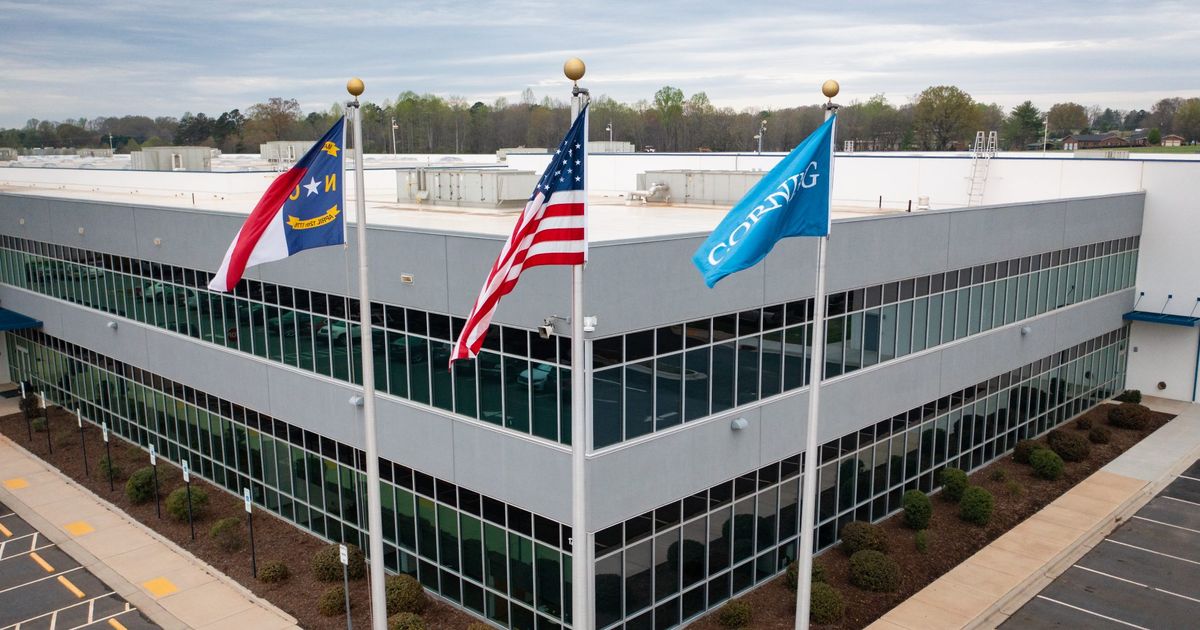
E-commerce giant Amazon is partnering with industrial manufacturer Corning Inc. to expand data center infrastructure across the United States, a multibillion-dollar deal that is expected to create about 1,000 jobs at Corning plants in North Carolina, the companies said Friday.

The agreement comes on top of Amazon’s plans, announced last year, to invest $10 billion in North Carolina to expand cloud computing infrastructure. Amazon has invested at least $20 billion in North Carolina since 2010, creating over 26,000 jobs spanning logistics, cloud infrastructure, and renewable energy across the Tar Heel State, the companies said. 

“North Carolina is proving that American manufacturing and cutting-edge technology go hand in hand,” U.S. Sen. Ted Budd, R-North Carolina, said in a statement. He said the deal would strengthen the U.S. supply chain for data-center infrastructure. 

North Carolina has been a magnet for companies focused on updating the nation’s power grid to accommodate renewable energy and increased power demand from data centers. 

In April, Hitachi Energy said it would create 150 jobs in Cary as part of a new $10 million center expanding its local engineering and testing functions — its latest effort aimed at strengthening the North American power grid in part to help support artificial-intelligence data centers.  

In 2024, Siemens announced plans to expand its Siemens Electrification and Automation U.S. headquarters in Wendell to meet demand in its growing data center, semiconductor and utility sectors — one of several planned expansion by the company in the state.

A unit of Houston-based MetOx International, a maker of efficient power transmission cables, also said in 2024 that it plans to create 333 jobs and invest about $194 million in Chatham County — part of a long-range plan to provide more efficient power for data centers, medical diagnostics and more.

“I am proud that we are continuing to capitalize on that momentum in North Carolina,” Budd said in his statement. 

Amazon Web Services last year announced plans to invest $10 billion in a North Carolina cloud computing and artificial intelligence innovation center — one of the biggest investments in state history, according to state and local officials. The project is expected to bring about 500 high-paying jobs to a 20-building, 800-acre campus in Richmond County, the company said in June. The company’s data centers power hospitals and emergency services, streaming entertainment and AI. 

Corning, a manufacturer of advanced glass and fiber optic technology used in optical fiber and cable, is used in that kind of infrastructure.

“This agreement with Amazon represents a significant milestone for Corning and for American manufacturing,” Wendell Weeks, Corning’s chief executive, said in a statement. 

It was unclear where the Corning jobs would be located. A company spokesperson didn’t immediately respond to a request for more information. 

Corning has manufactured optical fiber and cable in North Carolina for more than 40 years. The company employs more than 5,000 in plants across the state. Charlotte is home to Corning’s Optical Communications headquarters.  In 2023, the company opened an optical cable manufacturing campus in Hickory to support U.S. buildouts of high-speed fiber broadband networks. The company also manufactures optical fiber in Concord and Wilmington.

Through the agreement announced Thursday, Amazon will work with Corning on a new program that will expand its Fiber Optic Technician Training Program with Catawba Valley Community College to train students for careers in fiber optic manufacturing and related technical roles. 

The program provides hands-on education and courses that will increase the talent pool and offer pathways to high-paying technical roles. The efforts will help strengthen the domestic supply chain and U.S. manufacturing base while serving the region and state to help expand residential and commercial fiber densification efforts, the companies said.

“These long-term investments create long-term careers and real opportunity in the communities where we operate,” Matt Garman, the chief executive of Amazon Web Services, said in a statement.

Free Training

Source link

American Trailer Manufacturers Coalition calls 130.76% China trailer duties a win for U.S. manufacturing


The American Trailer Manufacturers Coalition (ATMC) today applauds the U.S. Department of Commerce’s (Commerce) announcement of preliminary antidumping duties of 130.76% on van-type trailers from China. The duties apply to van-type trailers sold in the United States at prices that were deemed unfairly low by Commerce. The determination follows Commerce’s June 3, 2026, preliminary finding that Chinese trailer producers benefit from significant government subsidies.

Upon publication of Commerce’s determination in the Federal Register, U.S. Customs and Border Protection will begin collecting antidumping duties on imports of subject merchandise from China at the preliminary rates established by Commerce. This includes Chinese-origin subassemblies entering the U.S. through third countries, such as Canada. These duties will be added to the countervailing duties already announced by Commerce, increasing accountability for unfairly traded imports entering the U.S. market.

“This determination is an important victory for American manufacturing and the thousands of workers who build trailers in communities across the country,” said Robert E. DeFrancesco, trade counsel to the Coalition and partner in the International Trade Practice at Wiley. “For too long, Chinese producers have exploited unfair pricing practices and government support to gain market share at the expense of the U.S. manufacturing industry. Commerce’s decision sends a strong message that American workers have been harmed by these practices and sets the conditions needed for them to compete on fair terms.”

The Department of Commerce’s antidumping investigation into Mexico remains ongoing, with a preliminary determination expected in late July. The agency is expected to issue final determinations later this year.
Free Training

Source link

New DOE-Argonne Partnership Targets Faster Commercialization of US Manufacturing Technologies


  • DOE and ANL have launched the National Science-at-Scale Collaborative to help U.S. firms move critical materials and chemical manufacturing tech into domestic production faster
  • Participating companies will get access to Argonne’s Materials Engineering Research Facility
  • The effort grew out of a DOE roundtable where companies laid out barriers to manufacturing

The Department of Energy and Argonne National Laboratory, or ANL, have established a joint initiative aimed at shortening the time it takes American companies to bring critical materials and chemical manufacturing technologies into commercial production.

ANL said Wednesday the National Science-at-Scale Collaborative, backed by DOE’s Office of Critical Materials and Energy Innovation, or CMEI, will pair companies with Argonne researchers to address the technical hurdles that often stall promising technologies.

Audrey Robertson, assistant secretary of energy and head of CMEI, said the United States cannot compete globally unless new technologies reach domestic production lines faster — the gap the collaborative is built to close by tying together the department, its national laboratories and the private sector.

What ANL Resources Will Industry Partners Gain Access To?

Companies joining the initiative will tap Argonne’s Materials Engineering Research Facility, where project teams can run simulations, apply artificial intelligence, rapidly synthesize candidate materials and trial new production methods on pilot-line equipment.

“American manufacturing has an opportunity to lead the next generation of innovation in critical materials and chemical processing,” said Paul Kearns, director of Argonne.

​“The National Science-at-Scale Collaborative will help connect discovery, engineering and deployment in ways that strengthen U.S. competitiveness and advance our economic security,” he added.

What Prompted the ANL-DOE Initiative?

The collaborative emerged from a roundtable convened by CMEI, where executives from the chemical and critical materials industries discussed the obstacles they face in domestic manufacturing and explored how government partnerships could help. Companies at the table included Aclara, Albemarle, ATALCO, BASF North America, Chemours, Dow, Entegris, Exxon Mobil, Orbia and Standard Lithium.

Free Training

Source link

Wazoku and Nterprisers partner to bring world-class innovation expertise to U.S. manufacturing


Simon Hill, CEO, Wazoku

Wazoku’s open innovation network and Nterprisers’ manufacturing connection and intelligence platform give SME manufacturers access to enterprise innovation

Manufacturing is now in an era where visibility and innovation capability determine competitive advantage. Yet innovation services have historically only been available to the biggest manufacturers.”

— Simon Hill, CEO, Wazoku

PROVIDENCE, RI, UNITED STATES, June 11, 2026 /EINPresswire.com/ — Small and medium-sized manufacturers across the United States can now access world-class innovation capabilities through a new partnership between Rhode Island-based manufacturing intelligence startup Nterprisers and global innovation ecosystem provider Wazoku.

Nearly 99% of U.S. manufacturers are small and medium-sized businesses. Many remain effectively invisible and absent from the databases, networks, and innovation programmes that larger enterprises take for granted. The partnership will address this, allowing manufacturers to participate in open innovation challenges, access collaborative problem-solving, and connect with global R&D expertise.

“Manufacturing is now in an era where visibility and innovation capability determine competitive advantage,” said Simon Hill, CEO, Wazoku. “Yet innovation services have historically only been available to companies with dedicated innovation teams and significant budgets. Connecting Nterprisers’ infrastructure to our global problem-solving network means manufacturers who have never had access to open innovation now do. In an increasingly challenging business climate, that’s a major shift.”

Wazoku’s Innocentive is a global marketplace of 1M+ solvers, startups, subject matter experts, and vetted IP. Organisations including NASA, Enel, AstraZeneca and other leading organisations post challenges, source existing solutions and vetted IP, and commission invention on demand where no ready solution exists.

Founded in Rhode Island and launched in 2025, Nterprisers has already made tens of thousands of manufacturers visible and accessible to customers, suppliers, service providers, investors, and other stakeholders through its growing platform. Beginning in Rhode Island and rapidly expanding by region, Nterprisers is creating unprecedented visibility into the U.S. manufacturing base, unlocking new connections, opportunities, and insights across the industrial ecosystem.

“Manufacturing networks are critical to the economy, but the U.S. manufacturing base has been fragmented and hard to find,” said Deepa Krishnamurthy, co-founder and CEO, Nterprisers. “We have already built the visibility and connection layer that makes manufacturers discoverable, but partnering with Wazoku means we can now connect them directly to innovation ecosystems and global expertise that were previously out of reach. Together, we are closing a gap that has held back millions of American manufacturers from fully participating in innovation-driven growth.”

What the Nterprisers-Wazoku partnership delivers

The initial focus of the partnership will be on helping manufacturers and the wider industrial ecosystem to:

● Access open innovation challenges and global problem-solving networks via Innocentive

● Increase supply chain resilience through better capability discovery and sourcing intelligence

● Collaborate on shared industry-wide challenges in areas where pre-competitive cooperation can drive collective gains

● Connect with researchers, startups, and technology partners relevant to their sector

● Accelerate modernisation and digital transformation with access to proven innovation methodologies

The partnership brings capabilities typically available only to large enterprises within reach of smaller manufacturers across the United States. It is especially relevant for manufacturers operating in aerospace, defence, advanced manufacturing, energy, and critical infrastructure sectors, where the need to modernise operations, strengthen supply chains, and accelerate innovation has never been greater.

– ENDS –

About Wazoku

Wazoku’s combination of human and synthetic intelligence enables enterprises, public sector organisations and academic institutions to discover opportunities, access external expertise, manage innovation portfolios, commercialise IP, track value creation or simply outsource for a specific outcome.

About Nterprisers

Nterprisers is building the intelligence and connection infrastructure for the U.S. manufacturing economy, enabling manufacturers to become visible, discoverable, and actionable at scale. By transforming fragmented data into structured manufacturing intelligence, Nterprisers helps OEMs, investors, lenders, policymakers, and manufacturers make faster, better-informed decisions across sourcing, investment, and industrial strategy.

PR Contact:

Paul Allen – Rise PR

+44 (0) 7515 199 487 / paul@risepr.co.uk

P Allen
Rise PR
+44 7515 199487
email us here
Visit us on social media:
LinkedIn
Facebook
YouTube
X

Legal Disclaimer:

EIN Presswire provides this news content “as is” without warranty of any kind. We do not accept any responsibility or liability
for the accuracy, content, images, videos, licenses, completeness, legality, or reliability of the information contained in this
article. If you have any complaints or copyright issues related to this article, kindly contact the author above.

You just read:

News Provided By

June 11, 2026, 10:00 GMT


EIN Presswire’s priority is author transparency. We do our best to weed out false and misleading content. The content above is
the sole responsibility of the author who makes it available. If you have any complaints, kindly contact the author above.


Free Training

Source link

APAA celebrates one year of President Trump’s 50 per cent Section 232 aluminium tariff and historic investments in US manufacturing


Alternate Text

CBAM is applicable to trade volumes starting from 50 metric tonnes. For trade volumes below 50 metric tonnes, CBAM does not apply.

Usage Procedure – How to use the CBAM Calculator Sheet

Enter or update values only in the
INPUT
PARAMETERS section (Highlighted in blue)
,
including
the carbon price, benchmark emissions, CBAM
chargeable
percentage (as per the phase-in year),
and imported quantity.


The system will automatically calculate the
payable
emissions and the total CBAM cost (€)

based on the
inputs provided.


Notes:

• Change any input value to automatically update CBAM cost.

• Formula used: Carbon price × payable emissions × quantity.

• Model aligned with CBAM supplier-side illustrative methodology.

Free Training

Source link

Argonne and the Department of Energy Launch New Partnership to Speed up U.S. Manufacturing Innovation | Press Releases


The U.S. Department of Energy’s (DOE) Argonne National Laboratory has launched a new effort to help American companies develop and scale new products and manufacturing technologies more quickly.

Called the “National Science-at-Scale Collaborative,” the effort is supported by DOE’s Office of Critical Materials and Energy Innovation (CMEI). The collaborative brings together industry, government and the national laboratories to address complex challenges in critical materials and chemical manufacturing in the United States.

Argonne will work with industry partners on projects designed to move promising technologies from research to commercial production faster. Researchers will use advanced computer modeling, artificial intelligence, rapid synthesis tools and pilot-scale manufacturing systems at Argonne’s Materials Engineering Research Facility to help companies test and scale new production processes.

“American manufacturing has an opportunity to lead the next generation of innovation in critical materials and chemical processing,” said Paul Kearns, director of Argonne. “The National Science-at-Scale Collaborative will help connect discovery, engineering and deployment in ways that strengthen U.S. competitiveness and advance our economic security.”

The announcement followed an industry roundtable chaired by CMEI. Leaders from the chemical and critical materials sectors met to discuss manufacturing challenges and opportunities for collaboration.

“To compete globally, the U.S. must bring new technologies into domestic production more quickly,” said Assistant Secretary of Energy Audrey Robertson. “This collaborative will help connect DOE, the national laboratories and private industry to speed up that process.”

The collaborative supports CMEI’s broader mission to strengthen America’s critical minerals supply chains and accelerate next-generation energy technologies.

Industry roundtable participants list:

  • DOE: Critical Minerals and Energy Innovation Office.
  • National Laboratory System: Argonne National Laboratory.
  • Manufacturers: Aclara, Albemarle, ATALCO, BASF North America, Chemours, Dow, Entegris, Exxon Mobil, Orbia and Standard Lithium.

Media gallery

Free Training

Source link

Amazon’s multibillion-dollar deal with Corning creates 1,000 jobs in North Carolina


Today, Amazon announced a multibillion-dollar agreement with Corning Incorporated, a leading manufacturer of advanced glass and fiber optic technology, to supply the optical fiber, cable, and connectivity solutions that power Amazon’s expanding data center infrastructure across the United States. The investment will create 1,000 new, highly skilled jobs at Corning’s manufacturing facilities across North Carolina, and support hundreds of additional construction jobs to expand Corning’s facilities.

Free Training

Source link